Why is my rhododendron yellow? Older leaves are changing, but the buds remain
Yellowing is mainly on the lower, older leaves, while several newer leaves remain green and flower buds are present. That suggests something other than general collapse, but what to do depends on a detail in the soil.
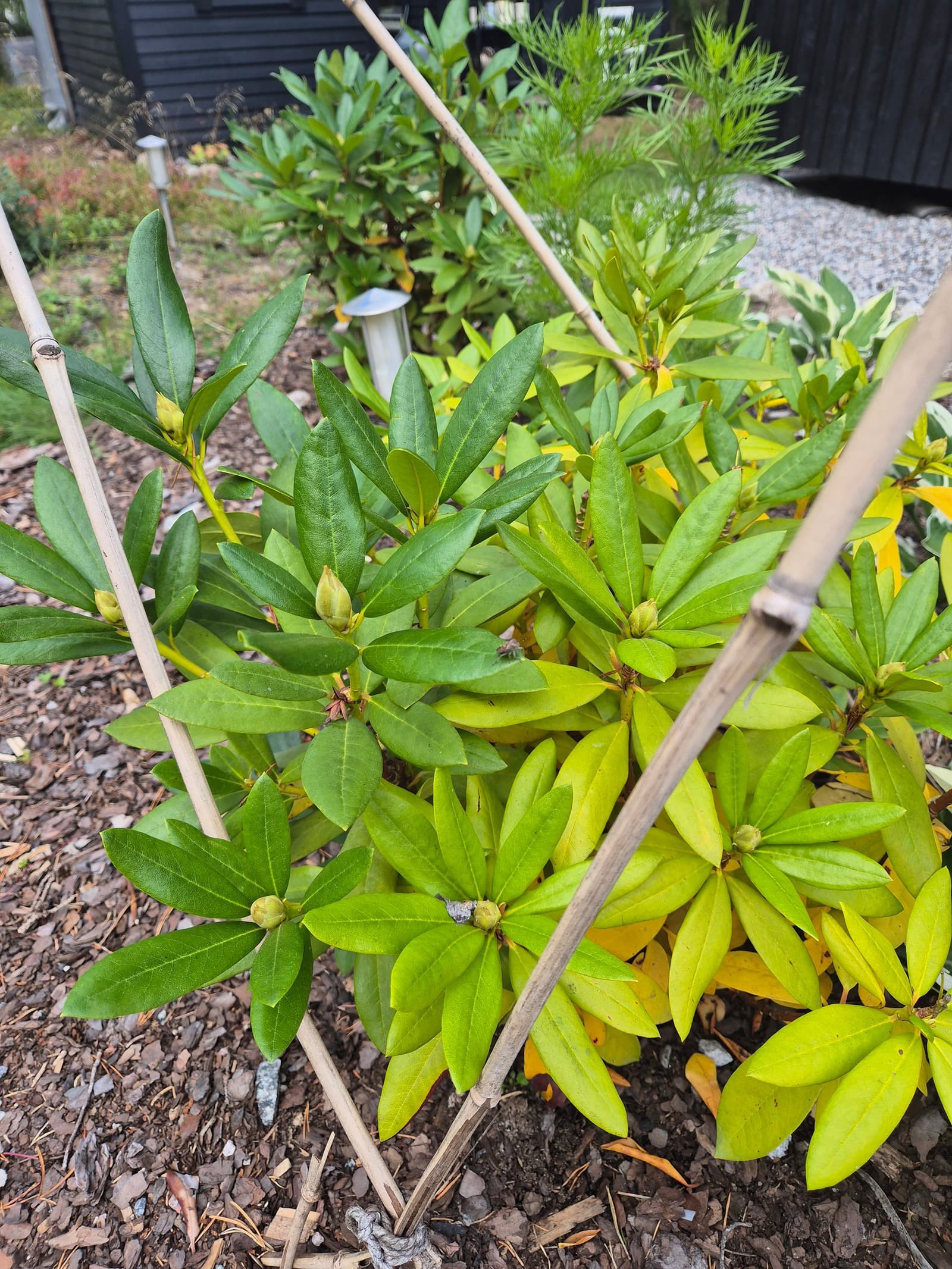
The photographs show a rhododendron whose older, lower leaves have become pale green to yellow, while younger leaves higher up remain noticeably greener. You also describe well-drained, evenly moist soil and partial sun. Together with continued flower-bud formation, that points more towards chlorosis and nutrient problems than sudden damage or a dying plant.
A common cause is difficulty taking up nutrients, particularly iron, because the soil is not acidic enough. Rhododendrons need acidic soil, and if the pH rises, leaves can yellow even when nutrients are present. Yellowing mainly on the oldest leaves also suggests that a general nutrient shortage, particularly nitrogen, may contribute. Some older leaves naturally yellow with age, but the extent here looks greater than normal leaf shedding alone.
The most worthwhile steps now
- Give a rhododendron fertiliser or another feed for acid-loving plants, following the dosage on the packaging.
- Measure the soil pH if possible. If it is too high, the plant needs more acidic conditions, for example with ericaceous compost or unfertilised peat worked lightly into the surface around the root zone.
- Continue maintaining even moisture, but avoid prolonged wetness even if drainage seems good.
- Leave yellow leaves until the plant sheds them, or remove only completely yellow ones that come away easily.
Avoid heavy liming, wood ash and fertilisers intended for ordinary shrubs or lawns, as these often work against a rhododendron’s needs. If new leaves also start yellowing despite the right feed and measures to improve acidic conditions, check the pH carefully and consider chelated iron. From the photographs, though, this mainly looks like a fairly common acidic-soil issue rather than a serious underlying fault.
Sources and images 1
- Original reader contribution ↗Reader question