Why does my cherry tomato plant look like this while its fruit is still ripening?
There are still green and orange tomatoes, but the leaves are yellowing and drying out. Here is how to distinguish the natural end of the season from added stress caused by feeding and watering in late August.
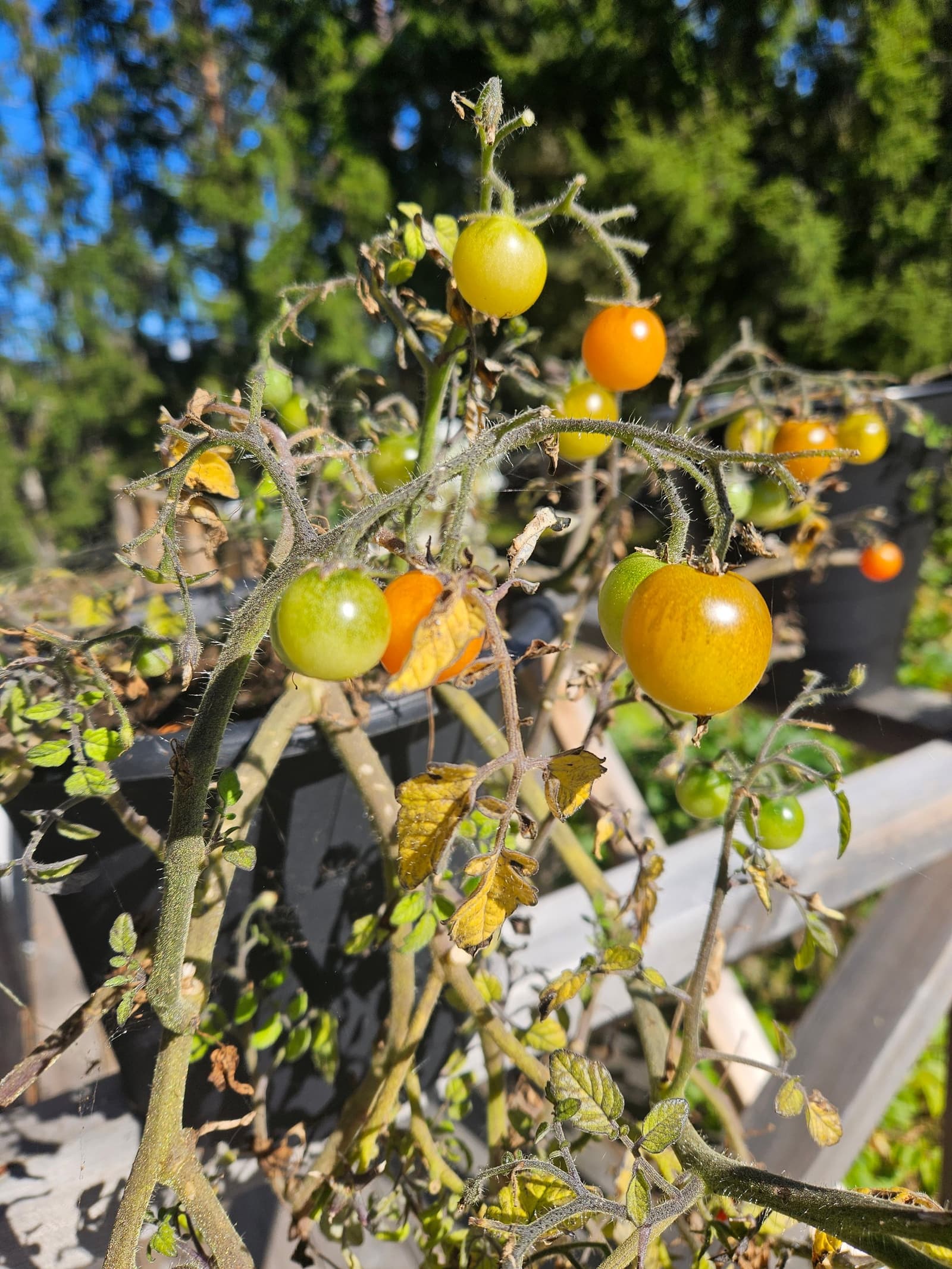
This looks like a cherry tomato plant approaching the end of its season while also under stress. The photograph shows extensive yellowing and dry leaves, but I cannot see the dark, concentric spots or mould that would clearly suggest a fungal leaf disease. Recent feeding and daily watering fit better with root stress or a build-up of salts in the soil, particularly outdoors in northern Sweden in late August, when the plant has little time left to produce new foliage.
The most useful steps now
Stop feeding for the time being. If the plant is in a pot or planter, water thoroughly once to flush excess nutrients out of the soil, then let the top few centimetres dry slightly before watering again. Daily watering can be too much if air cannot get back into the soil between waterings. On the other hand, letting it dry out severely between waterings can cause similar stress. Aim for steady moisture rather than watering every day out of habit.
Remove leaves that are already completely yellow, brown or crisp. They will not recover, and the plant is better served by putting its energy into the fruit it already has. The tomatoes still look usable, so focus on letting them finish ripening or bringing indoors any that have started to change colour.
Do not expect the plant to become truly lush again at this stage. If new leaves continue to turn yellow quickly after you stop feeding and adjust the watering, it is most reasonable to treat it as a plant coming to the end of its season and harvest what you can over the next few weeks.
Sources and images 1
- Original reader contribution ↗Reader question