Which clematis is this? Without flowers, a firm identification has to wait
You say it previously grew in a pot and that you have had it for 1–3 years. The photograph shows a healthy climbing clematis with thin, dark stems and varied leaf shapes, but the feature that identifies the variety is missing.
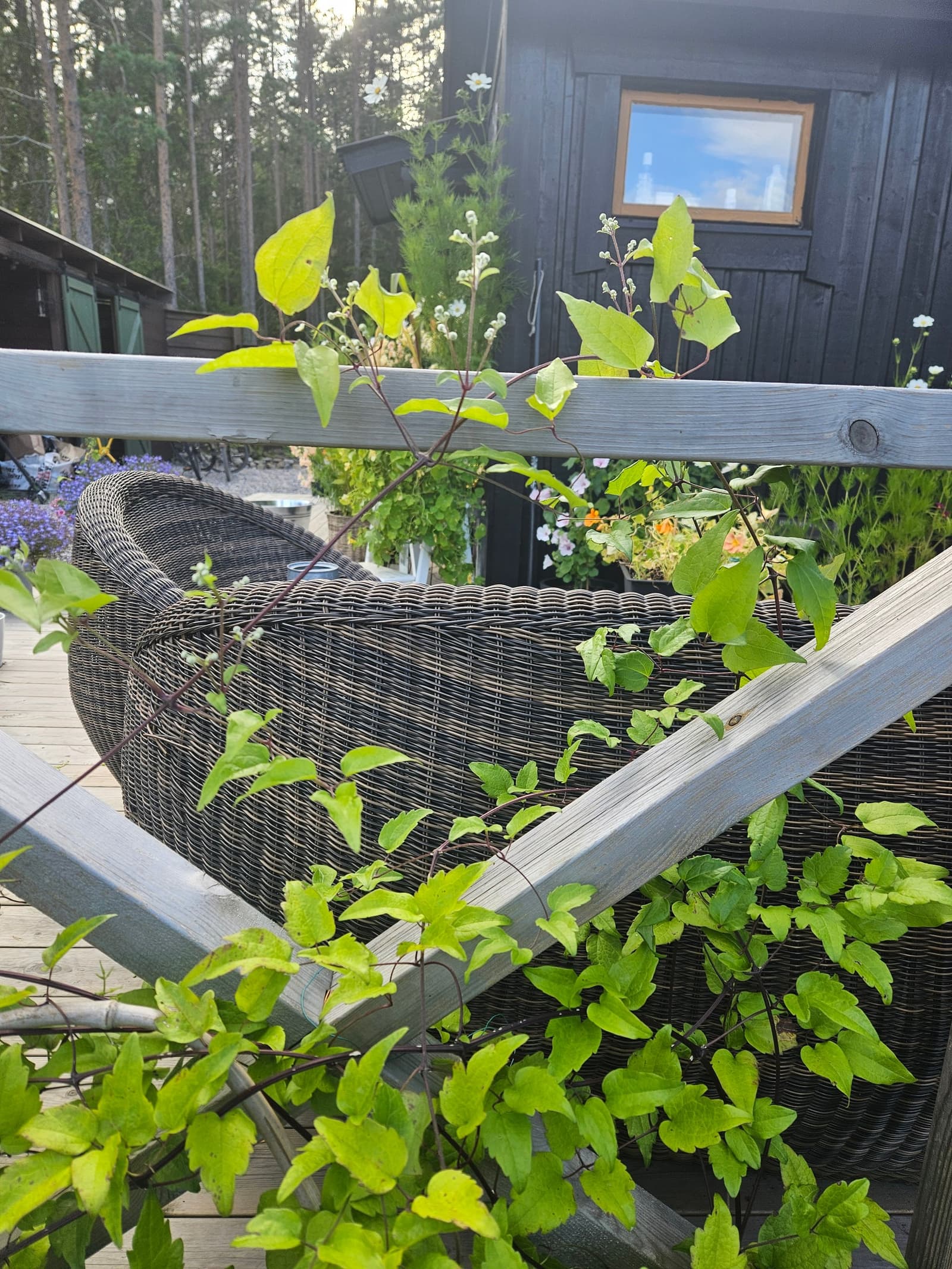
This is clearly a clematis. The photograph shows a climbing plant with thin, dark purple stems and leaves ranging from undivided to lobed, which is common in clematis. Without a flower, however, it is not possible to identify the variety, or even confidently assign it to a group.
Clematis are usually identified by their flowers: the colour, size, number of sepals, whether they nod or face outwards, and when they appear. Leaves are rarely enough, because many varieties look very similar before flowering. Your plant looks more like a small-flowered type than a large-flowered hybrid, but that is as far as the identification should go until it blooms.
How to take the identification further
- Take another photograph when it flowers, ideally both straight on and from the side.
- Photograph the whole plant as well, to show its habit.
- Note roughly when flowering starts and whether the flowers are small or large.
- If you still have the label from its time in a pot, that is naturally the best clue.
Because you mention that it previously grew in a pot, it may have been sold as a named variety. Without flowers, though, a reliable identification cannot be promised. A photograph when it is flowering will usually make it possible to get much closer.
Sources and images 1
- Original reader contribution ↗Reader question