What variety is this? An apricot-yellow double snapdragon – and what to expect from its seeds
The photograph shows a double snapdragon with unusual apricot and buttery yellow flowers. If you want to save seed, its double flowers are the key to what you can expect next year.
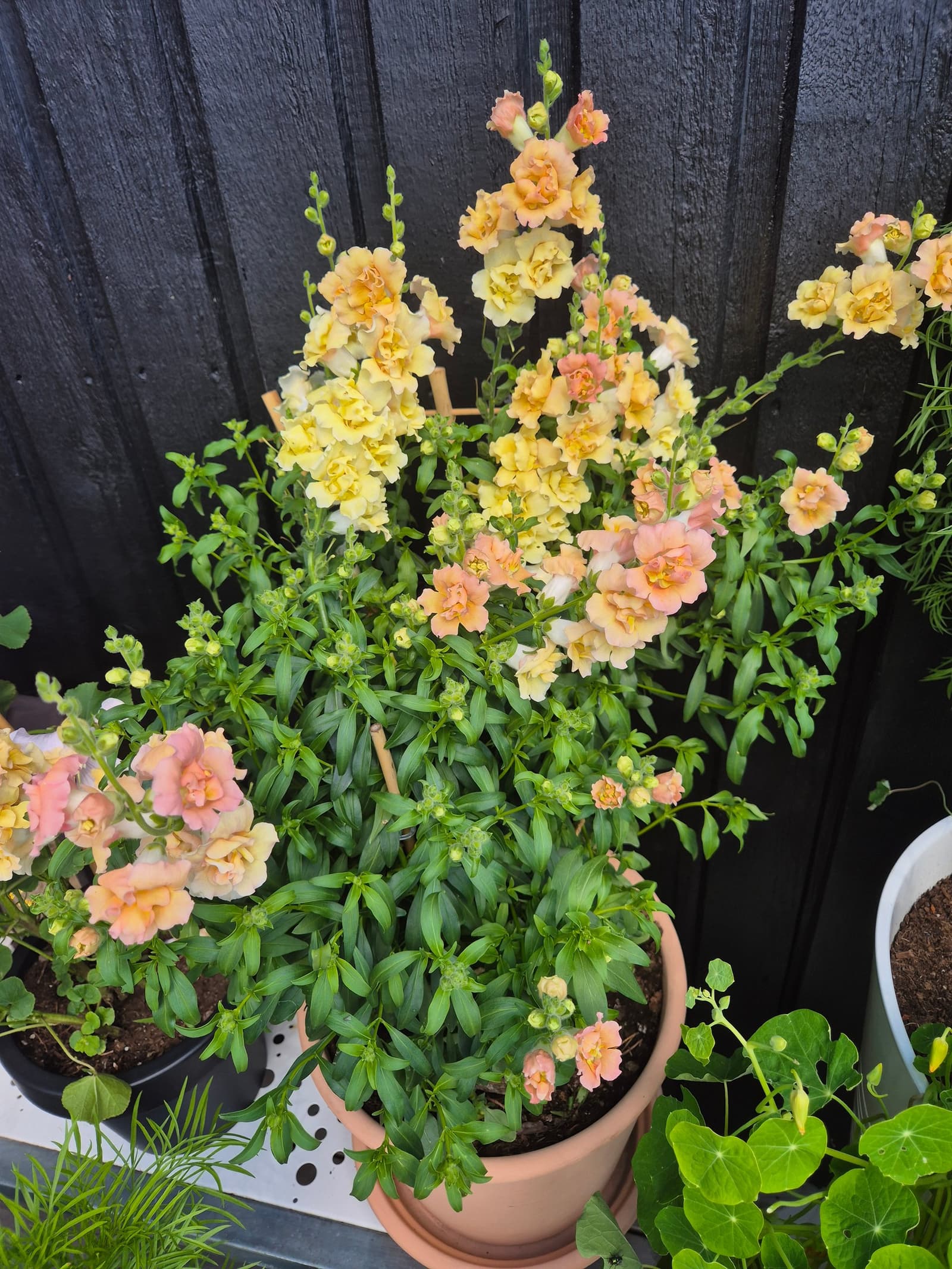
The plant in your photograph is a snapdragon, specifically a double-flowered form. The blend of buttery yellow and apricot and the dense, upright flower spikes fit these varieties well. An exact cultivar name is difficult to establish from a photograph alone, because many modern snapdragons look very similar in both colour and flower shape.
It is certainly worth trying to save seed. Snapdragons form small seed capsules after flowering. You say you are not sure whether any dry capsules are present yet, and the photograph mainly shows flowering stems and buds, so it does not seem quite ready. Leave a few flower stems in place without deadheading until the flowers have completely faded and the capsules turn brown and dry. As the capsules begin to open, cut the stem and finish drying it on paper indoors, then shake out the very small seeds.
The most important thing to know about the seeds
The seeds may germinate well, but the resulting plants will not necessarily be identical to this one. Double snapdragons, particularly named varieties bought from retailers, often produce variable offspring: some may have single flowers, while others differ in height or colour. Seed is therefore an uncertain way to preserve this exact appearance, but it is well worth saving if you simply want more snapdragons of a similar kind.
A simple method
- Choose a few healthy flower spikes and leave them until they have dried thoroughly on the plant.
- Cut them when the capsules are dry and starting to split, before the seeds fall out.
- Leave the stems somewhere dry for a few days, then gently pick or shake out the seeds.
- Store the seeds somewhere dark, cool and dry, in a paper envelope or another dry container labelled with the year and colour.
Sources and images 1
- Original reader contribution ↗Reader question