Those round-crowned trees: a special variety, or willows pruned into shape?
The photograph shows narrow willow leaves and an old crown divided into several dense, rounded sections. The key is not only which willow it is, but that the shape is usually created and maintained by pruning.
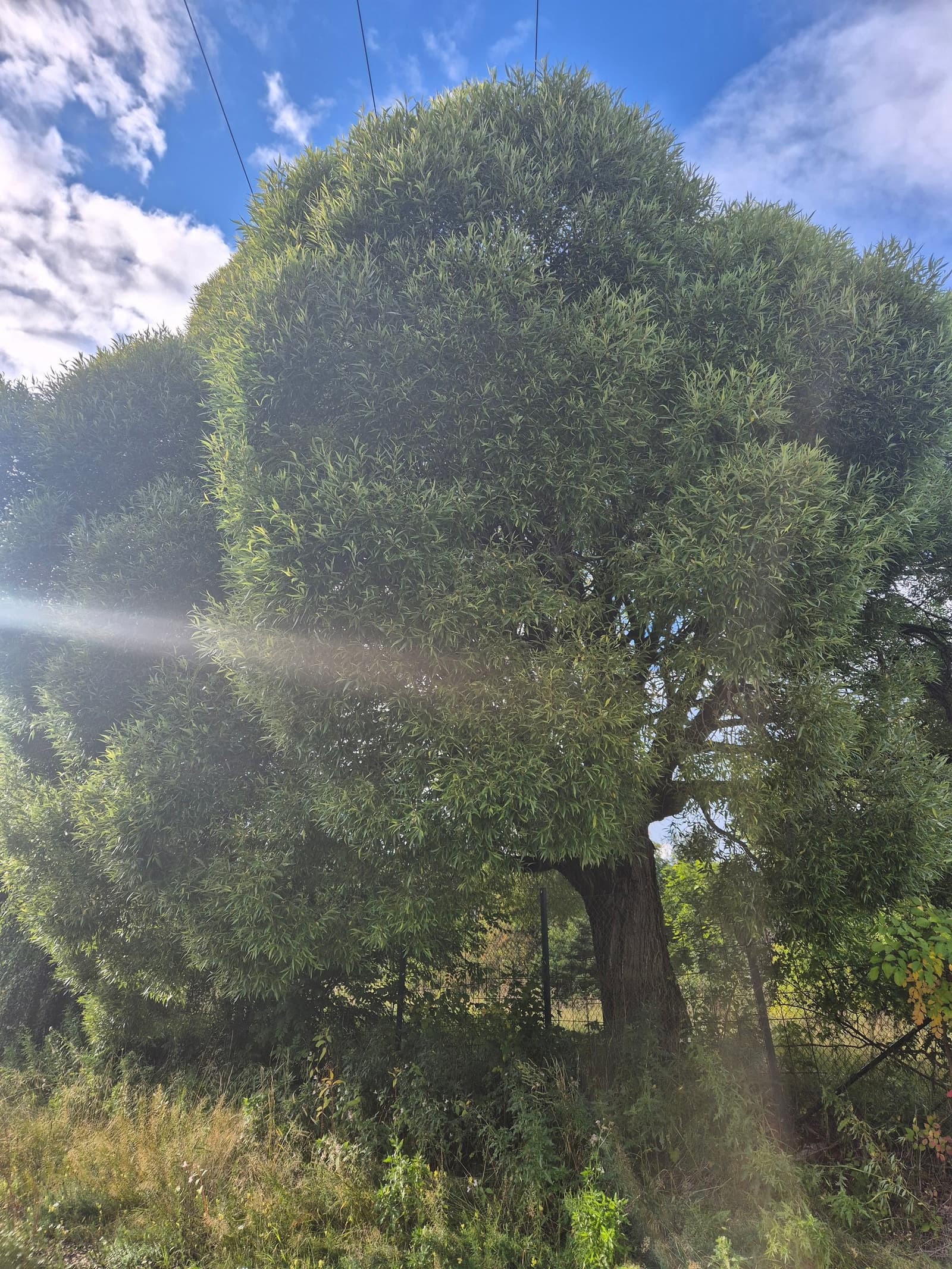
What you photographed is primarily identifiable as a willow, Salix. The narrow, lance-shaped leaves and dense, soft-looking branching fit well. That ‘ball tree’ appearance often comes from hard shaping followed by repeated pruning, building up several rounded parts of the crown.
You also say they do not look as though they were clipped into balls from the start. It is worth explaining that this is often not a special variety with a magical ball shape, but a tree that has developed that form over time. Some are sold as standards already trained towards the shape, but pruning often does the work.
Where can you buy them?
Look for standard or ornamental willows at specialist nurseries rather than searching only for ‘ball tree’. Ask for a willow on a clear stem with a dense crown, or for varieties suitable for shaping. In late August in Sweden, you can often still order or reserve one, while planting is best in early autumn when the ground is still warm and moisture is available. Do not leave it until the ground is close to freezing.
Pay more attention to the trunk and branch unions than to finding a perfectly round crown at purchase. The large, mature shape in your photograph is rarely available ready-made. It is built by regularly shortening the current year’s shoots so that the crown becomes denser each season.
Sources and images 1
- Original reader contribution ↗Reader question