The lilac behind the tree has gone: what can provide screening in the shade?
Behind your large tree in Norrmalm, the challenge is not just shade but drier soil and root competition. Some perennials are therefore much better suited than others to replacing the lilac with planting that builds real height.
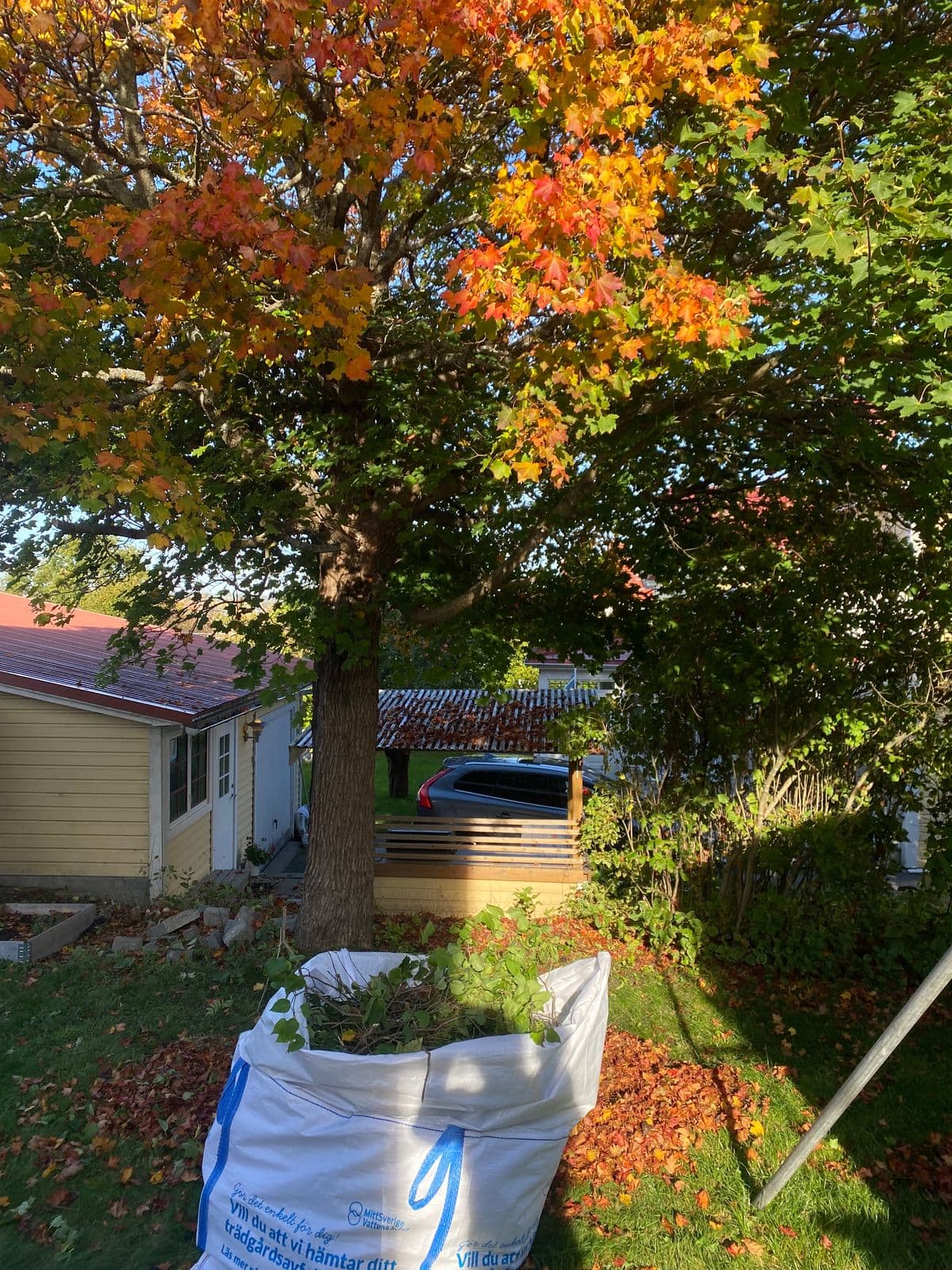
In the spot behind the large tree where the lilac has been removed, I would choose robust, shade-tolerant perennials that can also cope near the tree’s roots. Goat’s beard is the strongest choice for dense, fairly tall seasonal screening, while autumn bugbane suits a more upright but slightly airier effect.
As you have said you do not need screening all year round, perennials are suitable. Just do not expect the same solid barrier as a lilac shrub. Beneath a tree, partial shade is often combined with rather dry soil, especially in summer, and that determines the choice more than shade alone. Ordinary border perennials can be too weak there.
What I would plant
- Goat’s beard: grows tall, broadens over time and gives the strongest sense of a green wall during the season.
- Autumn bugbane: tall and elegant in partial shade, useful for height without a shrub-like outline.
- Hostas at the front: fill the lower layer so that the planting does not look sparse at ground level.
- Ferns can add volume to the shady planting, although they provide less screening than goat’s beard.
In late September, planting is still possible around Sundsvall, Sweden, while the ground remains warm and unfrozen. Improve the soil where the lilac stood, but avoid vigorous digging among large tree roots. Plant groups rather than isolated specimens to achieve the screening you want. The most useful next step is to measure the width behind the tree, then plant three to five substantial specimens of the same main perennial as one coherent group.
Sources and images 1
- Original reader contribution ↗Reader question