Apple leaves turning brown in September: the clues that point to scab
Your apple tree has dark brown, almost oily-looking leaf patches, and only a few leaves have fallen so far. That combination points more towards scab than normal autumn colouring and affects what to do now.
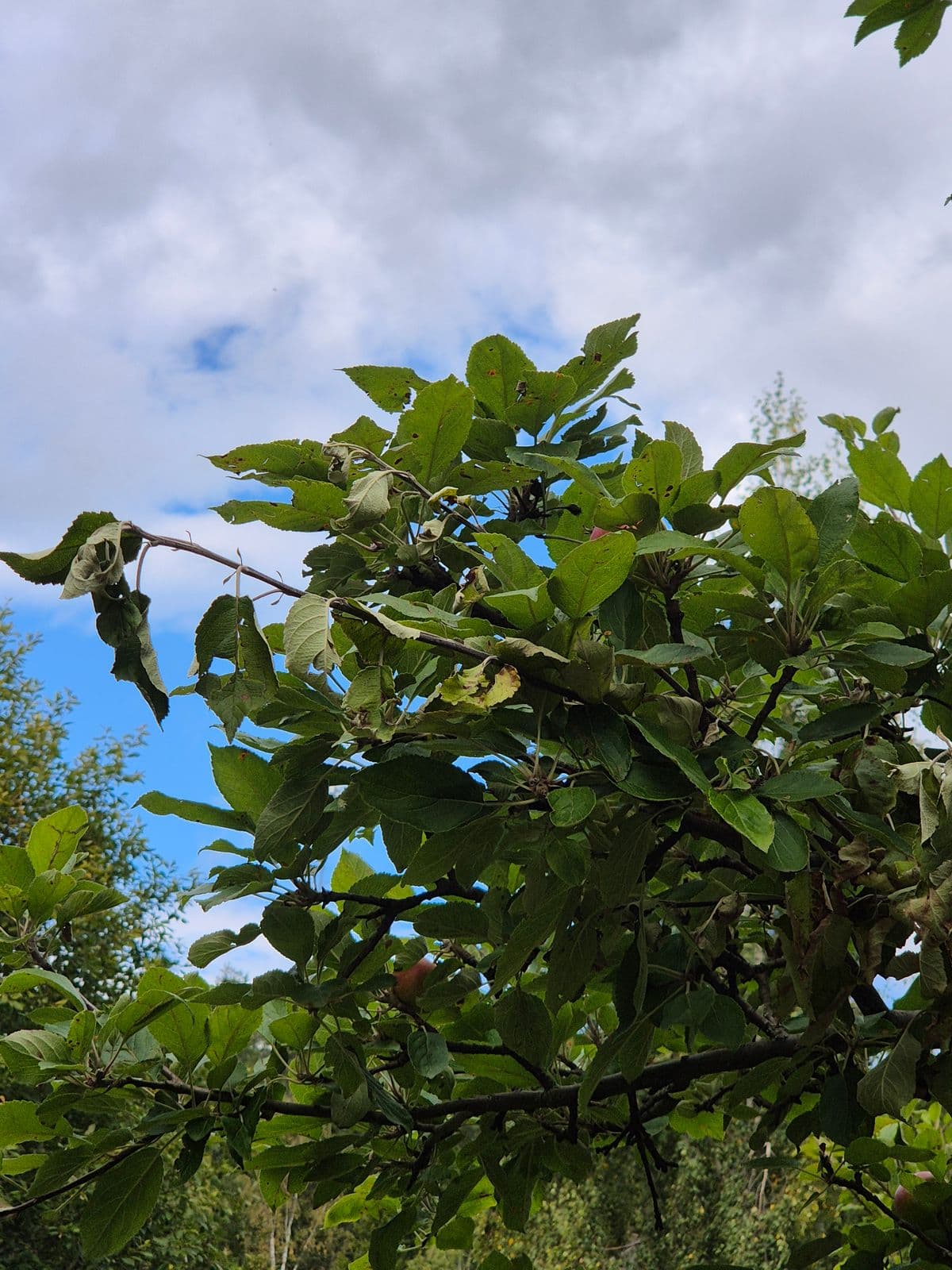
This looks like apple scab. The dark brown leaf patches are consistent with it, and affected leaves often turn brown earlier than normal and begin falling in September instead of staying healthy further into autumn.
The photograph also suggests the tree has not yet lost all its leaves, which fits your report that only a few have fallen. A tree can therefore still look quite green while a fungal disease is already affecting its foliage.
What to do now
- Collect leaves that have already fallen and remove affected windfall fruit beneath the tree.
- Do not leave infected material as mulch beneath the tree.
- If you compost, avoid putting badly affected leaves into a cool compost heap where the infection can survive.
In Norrmalm, Sweden, in early September, there is little point in trying to save this year’s affected foliage. The main aim now is to reduce infection pressure next season. If the problem recurs year after year, the next step is to thin the crown during dormancy so that leaves dry more quickly in spring.
Watch for fresh patches on young leaves next spring. If they return early, that suggests scab has overwintered in leaves beneath the tree, making thorough leaf clearance the most important measure.
Sources and images 1
- Original reader contribution ↗Reader question